Sharing to move forward
Shared mobility is often discussed in terms of efficiency, emissions reduction, or reduced car ownership. However, an initiative highlighted in the Moniteur de la mobilité et de la sécurité routière (Issue 76) shows that carsharing can also play a powerful social role, strengthening community ties and promoting inclusion at neighbourhood level.
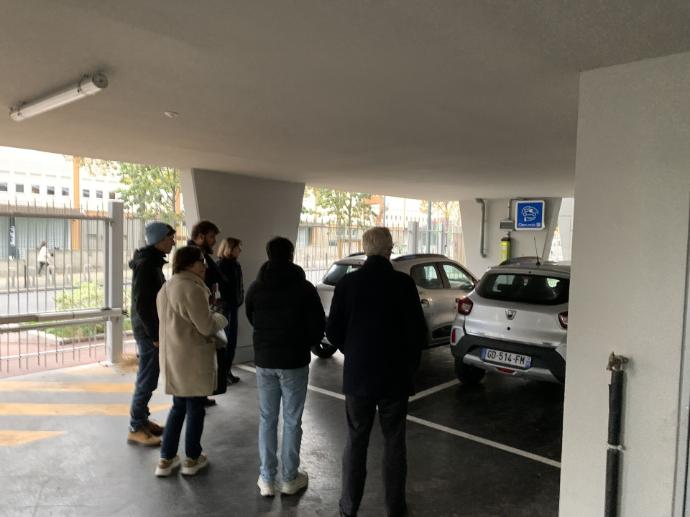
In the Brussels municipality of Molenbeek, carsharing has been developed not only as a transport alternative, but as a community-centred mobility solution designed to respond to local needs and realities.
Carsharing as a social practice
Rather than focusing exclusively on technology or infrastructure, the Molenbeek initiative frames carsharing as a shared social practice. By encouraging residents to collectively use vehicles, the scheme creates opportunities for interaction, trust-building and cooperation among neighbours.
This approach challenges the traditional perception of mobility as an individual service and instead presents it as a collective resource, one that can reinforce social cohesion in dense and diverse urban areas.
Improving access and inclusion
A central objective of the initiative is accessibility. Carsharing in Molenbeek is designed to reach residents who may not own a car due to financial, social or practical constraints. For many, shared vehicles offer occasional access to a car when needed, without the costs and responsibilities of ownership.
By lowering entry barriers and actively engaging local residents, the project supports a more inclusive mobility system, ensuring that sustainable transport solutions benefit a broad range of users rather than a select few.
Strong local partnerships
The success of the carsharing initiative relies on close collaboration between local authorities, community organisations and residents. These partnerships help ensure that mobility solutions are aligned with neighbourhood priorities and embedded in the local context.
Such cooperation demonstrates how shared mobility can contribute to wider urban objectives, including improved quality of life, stronger communities and more sustainable travel behaviour.
A broader impact beyond transport
One of the key messages of the article is that carsharing’s value goes beyond mobility itself. By encouraging shared use of resources, the initiative fosters social interaction, mutual support and a sense of collective ownership.
In this way, carsharing becomes a catalyst for community resilience, supporting both environmental goals and social well-being.
Relevance for STEER-NWE
The Molenbeek example provides valuable insights for cities and regions involved in the STEER-NWE project. It illustrates how shared mobility can be implemented in a way that is not only sustainable, but also socially meaningful and locally grounded.
By placing people and communities at the heart of mobility planning, initiatives like this offer inspiration for European regions seeking to develop inclusive, innovative and people-centred transport solutions.
Read the full article
This article was originally published as part of Moniteur de la mobilité et de la sécurité routière (Issue 76), in French. You can access the full article via the below link.
Continue readingThe organisations behind this project:
Community Land Trust Brussels (CLTB) – The non-profit organisation leading a carsharing project in social housing in Molenbeek.
CLEM SAS – Partner in the Inclusive Carsharing pilot with CLTB.
Optimobil Belgium NV – Mobility provider working on carsharing solutions at local level.
Ligue des Familles (vzw) – Partner in family-oriented carsharing initiatives supported through Inclusive Carsharing calls.